Here’s a bit of harsh truth. Occasionally, I used to find new music through Instagram Reels. I know. I know. But it was during the phase when I was constantly watching Reels.
More than a year ago now, the clip that caught my ear was maybe thirty seconds long, with a guitar riff that had a specific texture that felt both enormous and intimate at once. The guy started singing, and I was impressed. It was a slow-burning alt‑rock track with big harmonies. I stopped scrolling.
The song was “Zero to One,” and the artist was Basement Alchemy.
I learned very quickly that Basement Alchemy is the project of Shai Pelled, who started the whole thing in a London basement with a microphone and some YouTube covers. By the way, his covers of The Cure’s “Lovesong,” Linkin Park’s “Burn it Down,” and R.E.M.’s “Losing My Religion” are amazing. The origin story matters more than it might seem. All of what you hear in his original music carries that sound of one person figuring out what they want to say and then doing it.
He’s a one-man band.
It’s the same ethos Wolfgang Van Halen brought to his personal musical project, Mammoth. The difference is that Basement Alchemy has been doing it longer, with less fanfare, and with a catalog that deserves significantly more attention. I’m trying to change that.
His debut record opens with a song called “The Optimistic Road,” which could be the title of his whole musical endeavor. There’s a string arrangement underneath a rocking riff that makes it feel cinematic. Critics have drawn comparisons to Queen, A Perfect Circle, and Tame Impala. He cites the Beatles and grunge in general as influences. He works in the space where those influences meet rock and pop. I’d call it 1990s alternative rock pushed into the 2020s.
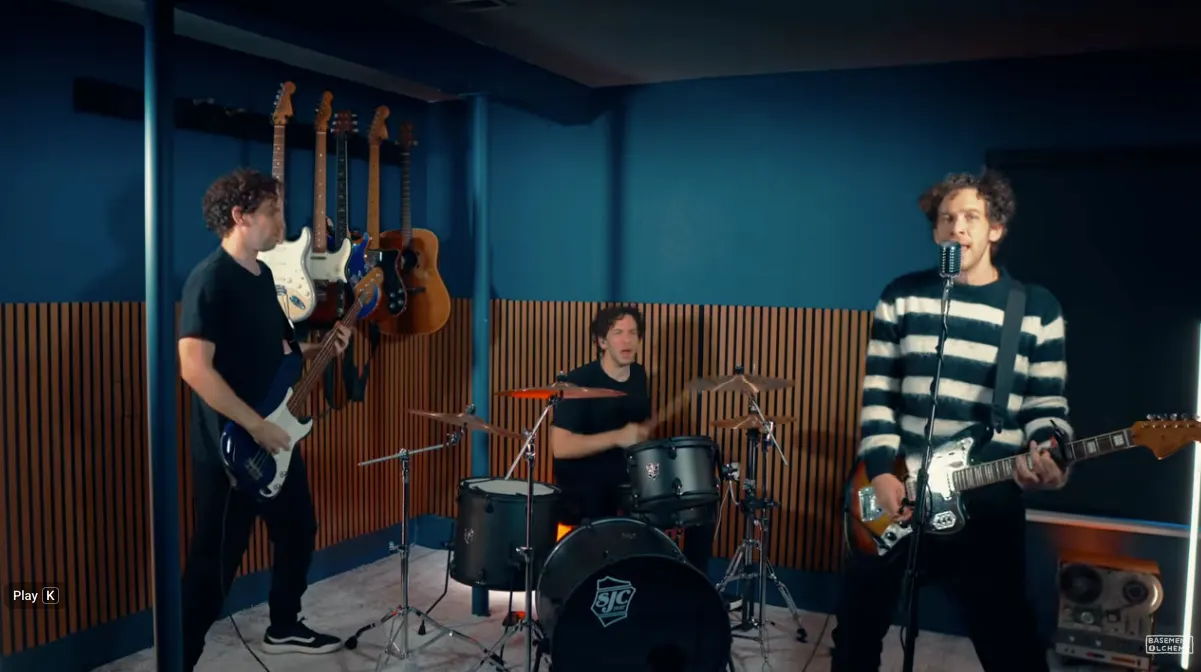
One of my favorite things from last year was The Basement Alchemy – Live from the Basement. The video was one of the coolest watches I had seen in 2025. I love how he not only played every instrument but also crafted the video to look like a full band, even though it’s just one guy playing everything.
Which brings me to his latest album, Introverse. I’m writing this having spent time with an advanced copy. I’m one of a few hundred people who were able to get a signed physical CD months before the release, and I’m honored to say I’m acknowledged in the liner notes for my early faith in Pelled. I want to be honest because this isn’t a puff piece from someone with a vested interest in hype. It’s a genuine listen from someone who has followed this project and wants more people to find it.
The album sits in the lineage of Basement Alchemy’s previous work, In Spirals/Heads, In Spirals/Tails, and especially Changing Colors, while feeling like a natural evolution rather than a reinvention. If Changing Colors was the album where everything clicked into place (and in my opinion, tracks like “Miracle“ and “Zero to One” remain the high-water mark of his catalog), Introverse feels like the morning after a breakthrough. It’s settled and inward-looking. The title says it all.
The sonic fingerprint is early Collective Soul, filtered through a modern indie-rock lens. The first single, “How to Have a Good Day,” is the best song of the collection. It’s the album’s most melodic song with the most accessible sound and a fantastic riff. I hear the Beatles influence here and it’s completely natural. “My Mind” wears its Collective Soul influence (The “Shine”-era riff is unmistakable) on its sleeve and is better for it. “Are You Real?” might be Shai’s best vocal on the album. He effortlessly moves from his straight singing voice to his head voice.
The B-sides gifted with the early copy, “Retired & Re-Energized” and “Underneath the Light,” are strong enough that I wish they’d made the proper album. That’s a minor complaint, but I do hope he adds them as singles after Introverse comes out officially in October. In the meantime, I just made my own playlist and added the tracks like it was 2012, and I’m making yet another playlist in iTunes.
After listening to the full album for a few days, what stays with me is the ambition underneath the intimacy. These are songs that want to say something and reach for something larger. Just like the rest of the entire Basement Alchemy catalog, Introverse feels like the work of a singular creative genius.
In fact, I think that’s the whole point.
Be seeing you.