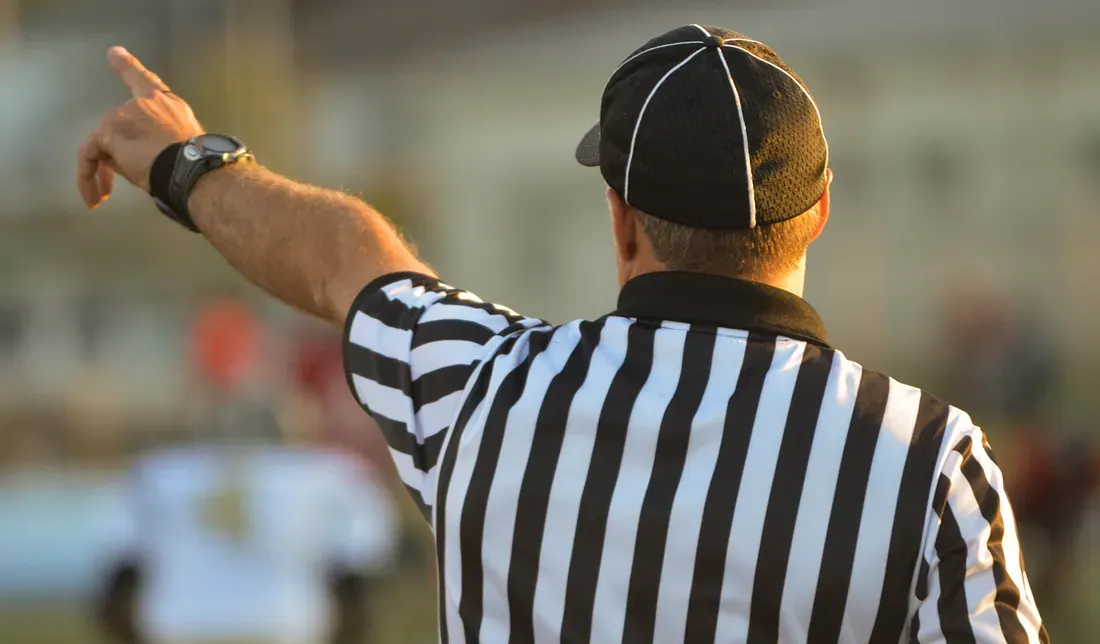
“Hey you in the stands? I’m way closer than you when I made the call. Like way closer.”
Everybody hates the umpire.
They make a good call, but against your team, and the boos and the “are you blind?” exclamations come out.
They make a good call, but for your team, it’s the other side that gets upset.
They make a bad call, but for your team, you keep your trap shut even though the other side, screaming about it, is right.
They make a bad call, and it’s against your team, the yelling really starts, and the “umps lost us/nearly lost us the game” lines will inevitably be expressed.
A good ump is a shadow, invisible. A ninja. He or she makes the right calls, all the time. End of the story. Unfortunately, umpires are only human. They make mistakes. It’s part of the game. I can even get behind a consistent ump, especially if he or she calls a visible ball a strike every time. However, umpires who interject themselves into the sporting event are the worst because they get in the way of fans who came out to enjoy the game, not to watch the antics of the umpire.
Umpiring is a thankless job. I can’t imagine why anyone would want to be an umpire or a referee, depending on the sport.
One of my biggest pet peeves is umpires and referees who make it about themselves.
I’m reminded of Ted Valentine, who for decades was one of the best college basketball referees in the business. Still, his antics on the court earned him the nickname, “TV Teddy.”
The Indiana-Illinois game in the late 90s, when Valentine issued a technical to Bobby Knight as he came out to check on his injured player, is one of his lowlights. I’m a huge Illinois fan and can’t stand Knight, but man, was he in the right, and TV Teddy was in the wrong.
You can see Valentine knew full well he’d made a massive mistake and wasn’t about to take it back and make Knight the higher authority. As the announcers explain, he could have quickly taken it back immediately and restored order once the other ref, Ed Hightower, explained it to him. He didn’t, and since he chose the path of boos and taunts, he had to stick to his guns and not admit he’d made a mistake. He inserted himself into the proceedings in a way that was quite dumb and should have been avoided.
But I get it.
In my high school days, one of the best ways to make a bit of money was to umpire in Little League. I spent a summer going to Khoury League games, putting on a blue shirt and calling balls and strikes for 10–12-year-olds. It was fun. Mostly.
As an umpire, I was pretty good at calling balls and strikes. As a Khoury League ump, the most important thing to do was to ignore the crowd as they yelled after every pitch and every call. I was mostly embarrassed for these parents as they lived vicariously through their children’s ability to play baseball.
One time, a foul tip went straight into my mask, knocking me back and stunning me for a bit. As my custom behind the plate, I didn’t yell out balls. If I didn’t say “Strike” and make a pointing motion, it was a ball. I hadn’t made a strike call on the foul tip, so the count on the scoreboard didn’t reflect a second strike. The next pitch, I called the batter out with a third strike, and nearly everyone in the stands rooting for the batter’s team went ape shit because they all thought it was strike two. It was not strike two. I hadn’t messed up the call; I just didn’t automatically indicate strike two because a Khoury ball had hit me in the face mask.
Parents screamed at me from behind the chain link fence. I was called all sorts of names. The batter called out didn’t complain. His coach didn’t complain. It was the parents. The fans.
Of course, the worst thing I did as an umpire was, to say the least, borderline inserting myself into a game over a controversial call.
I was umpiring in the field with a man on first. Since we only had two umps per game, I was standing behind second, ready to make a call on an attempted steal and prepared to run closer to first to make the call on a groundout or even a rare double play.
The batter hit a home run. He’s celebrating like a 12-year-old who hit a home run might, jumping around and throwing his fists in the air. He was basking in the glory. I’m standing practically on top of second base. He heads to second and doesn’t step on the bag on his home run trot. I have about 10 seconds to decide whether to call the kid out as soon as he steps on home for not stepping on second base. I weigh the odds. He steps on home plate, and I walk past the mound toward home and call the runner out.
The kid runs at me and stops short of tackling me. He yells. His coach comes out. He screams. The parents on that side of the fence are just short of storming the field. I continue walking toward the home plate umpire I was paired with that game, an older gentleman who had seen plenty and called many balls and strikes, and says quietly, “He didn’t step on the bag.” He just sighed.
I walked back to my perch behind first base and endured a constant barrage of nasty words from fans and parents along the first base line. It was constant. I ignored them.
I might have been in the right, but I was so very wrong.
It was the last time I umpired.
It’s good to be reminded that we all make mistakes. It’s also good to learn from the experience and not make the same mistake twice.
For me, I should keep my own Khoury ball umpiring experience at the forefront, especially when I want to yell at umpires and referees when calls don’t go my way while watching my favorite teams.
Be seeing you.