 Sean McDevitt
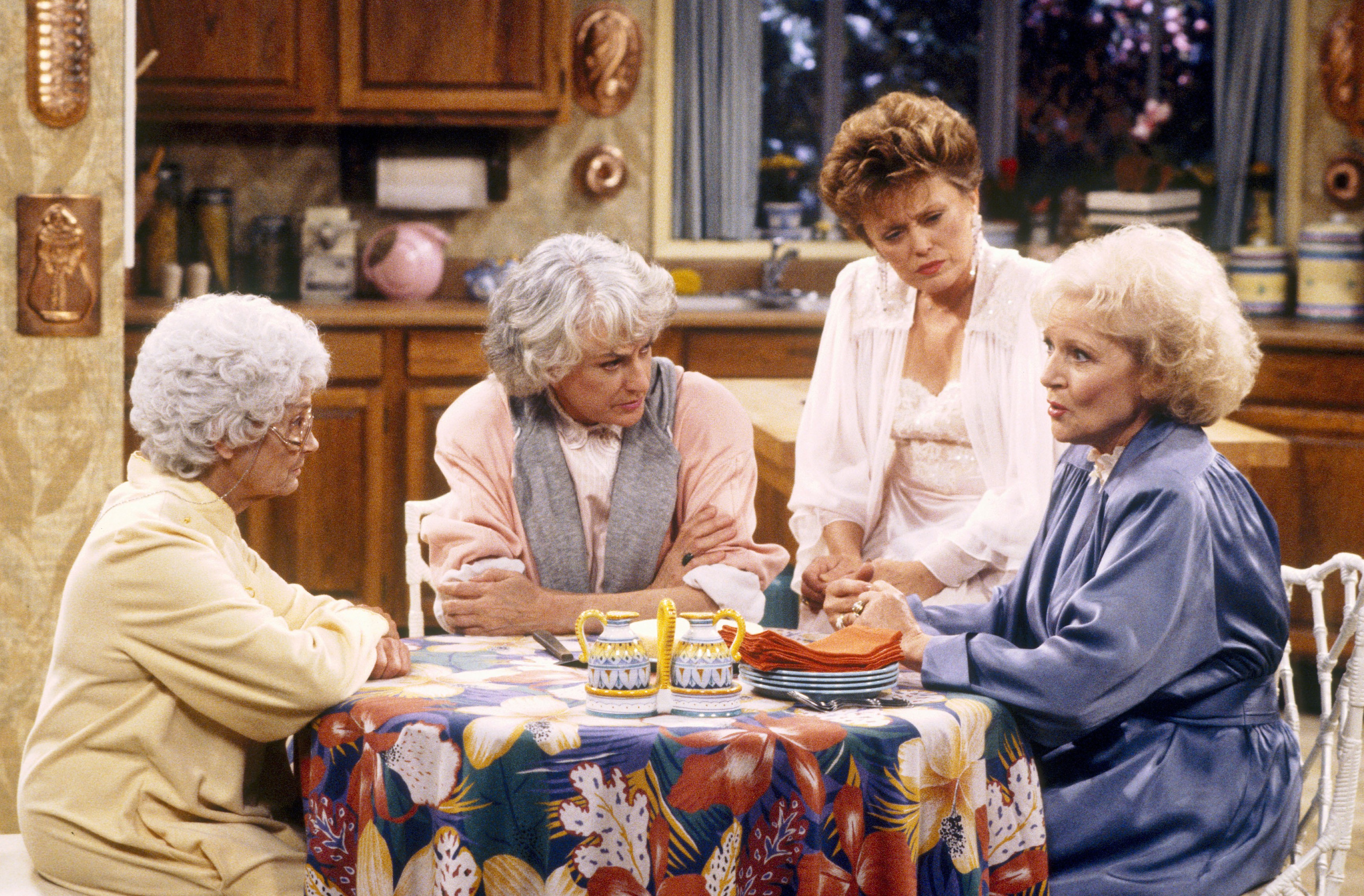
My wife and I go to sleep every night to echoes of The Golden Girls theme song. I have seen every episode at least ten to twenty times now.
That should embarrass me more than it does. A grown man, drifting off to a sitcom about four women in eighties Miami. But the show has become part of the house. It’s the last thing we hear before the lights go out. Thank you for being a friend, and then sleep.
For a long time I thought comfort television worked by asking nothing of you. Then I watched these episodes ten times each, then fifteen, and noticed something. They keep asking.
Take “Old Friends,” the season three premiere. One storyline is pure silliness. Blanche gives away Rose’s beloved teddy bear to a little girl, who promptly holds the bear for ransom. It’s exactly as ridiculous as it sounds, and it’s wonderful. The end with Rose and the girl might be the all-time best Rose moment on the show. The other storyline is not silly at all. Sophia befriends a man named Alvin on the boardwalk, and slowly, without ever announcing it, the show lets you understand he has Alzheimer’s. Estelle Getty plays it so quietly you almost miss how good she is. One episode. One half hour. It made me laugh out loud and then sat on my chest for a while.
The show did that more than people remember. In “An Illegitimate Concern,” the man Blanche is sure is a besotted stalker turns out to be her late husband George’s illegitimate son. It could have curdled into a very special episode. It never does. It plays the whole thing for laughs and for real feeling and never once for sap. Sophia gets the best line after one of Rose’s endless St. Olaf stories, “Hemingway ran out of stories to tell and he shot himself. She just keeps on going.” A season later, in “Mrs. George Devereaux,” George walks back in alive, having faked his own death, and it lands on Blanche like a verdict. Rue McClanahan plays the betrayal for keeps. It’s one of the early “It was all a dream” sitcom plots, but it works perfectly.
And then, thank goodness, there are the episodes that are just funny and unashamed about it. My favorite of the whole run might be “The Actor.” A smooth, handsome actor blows into town for the community theatre and quietly romances all three of them at once, and the farce builds until it topples. Nothing about it is deep. It doesn’t try to be. It’s the ensemble at full stride, and it hands Rose one of her finest bewildered lines, once she works out she’s been played. “I feel so common. So cheap. So used. Blanche, how do you usually deal with that?”
There’s “Ladies of the Evening,” where the girls win tickets to meet Burt Reynolds and, through termites and a hotel that turns out to be a brothel, get arrested as madams. There’s the Valentine’s Day episode, where a trip to the drugstore ends with Dorothy shouting the word “condoms” at Rose four times in a row until the whole store hears her. I know it’s coming, and I laugh every time.
My other favorite comes near the end, when the show was running low on gas. In “The Case of the Libertine Belle,” Blanche stages a murder-mystery weekend to impress her boss. Dorothy solves the fake case in about ninety seconds, and then someone turns up, actually stabbed, with Blanche the prime suspect.
Betty White always said her favorite was “A Little Romance,” the one where Rose dates a man who happens to be a little person. What makes it work is that the show never laughs at him. The humor is all the girls and their own awkwardness. That was the ethic of the whole place. Be as funny as you want, but never punch down.
The company these girls kept was a joy. George Clooney turned up as a rookie cop before he was George Clooney, and it gets me every time. Dick Van Dyke played a big-shot lawyer who wanted to quit the bar and join the circus as a clown. Did you know Quentin Tarantino was an extra playing an Elvis impersonator?
The Golden Girls was a comedy about people the culture had quietly filed away. Widowed or divorced, past whatever age television usually bothered with focusing on. And the whole premise, the beating heart of it, was that they were still funny, still hungry, still falling in love, and, above all, still making friends. Not keeping old ones. Making new ones.
I didn’t understand any of this the first time through. I was watching for the jokes, and the jokes are great. It took repetition to see the rest, the quiet argument under all the farce, that friendship is the thing that holds when everything else has gone. Husbands die. Marriages end. Children grow up and move away. The friends are still at the kitchen table at two in the morning, eating cheesecake, telling the truth.
So my wife and I fall asleep to it. Same theme song, same voices, same four women we’ve now spent hundreds of nights with. It is the least sophisticated thing I do all day, and one of the ones I’d defend the hardest. A show about how much people need each other, playing softly in a dark room, next to the person I need most.
Thank you for being a friend. I mean it about the show, and I mean it about her.
Be seeing you.